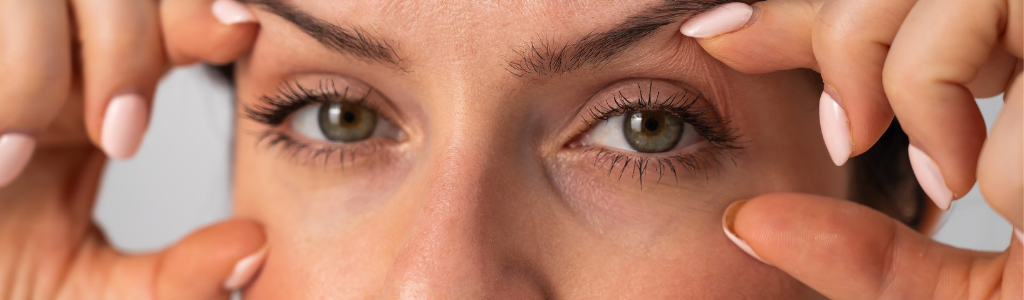
What is Upper Eyelid Surgery? Who is it for?
Upper eyelid surgery — medically known as upper blepharoplasty — is a surgical procedure that corrects excess skin, sagging tissue, and, if necessary, fat tissue in the upper eyelid, giving the eyes a younger, more rested, and open expression.
With age, the skin of the upper eyelid loses its elasticity and begins to sag downwards due to the effects of gravity. This sagging not only creates an aesthetically tired and aged appearance, but in advanced cases, it can also become a functional problem by narrowing the field of vision.
With extensive experience in over 500 blepharoplasty cases, Op. Dr. Selçuk Yüce successfully performs upper eyelid aesthetics, achieving both aesthetic and functional goals.
Why do upper eyelids droop?
There can be several factors behind upper eyelid drooping:
Aging and Loss of Skin Elasticity
As we age, collagen and elastin fibers in the skin decrease, causing it to lose elasticity. The thin skin on the upper eyelid is particularly sensitive to this change and begins to sag over time.
Fat Tissue Change
With age, the fat deposits in the upper eyelid can shift or gain volume. This can cause a feeling of fullness and heaviness in the eyelid.
Levator Muscle Weakness (Ptosis)
Weakening of the levator muscle, which lifts the upper eyelid, leads to the eyelid drooping. This condition is called "ptosis" and is treated not only with skin removal but also with muscle repair. Differentiating ptosis from ordinary upper eyelid drooping is critical for planning the correct treatment.
Hereditary Predisposition
In some individuals, upper eyelid drooping may appear at an earlier age due to a genetic predisposition. In these patients, the clinical picture, not the expected age for surgery, determines the outcome.
Who is a suitable candidate for upper eyelid surgery?
Those with Aesthetic Complaints
Individuals who complain that their upper eyelids appear saggy, heavy, or tired; who wish their eyes to look more open and rested; and who feel that this is affecting their daily life or self-confidence are suitable candidates for upper blepharoplasty.
Patients with Narrowed Visual Field
Severe drooping of the upper eyelid can obscure the upper part of the visual field. This can make driving, reading, and other visual tasks difficult. These cases, called functional blepharoplasty, constitute a medical indication.
People who have difficulty applying makeup
Drooping upper eyelids can make applying eye makeup difficult; they can also cover the applied makeup and prevent it from being seen. Many patients come to us mentioning this problem.
Those with Asymmetrical Top Cap Problems
Significant asymmetry between the two upper eyelids — one appearing noticeably more sagging than the other — can be corrected with upper blepharoplasty. Unilateral or asymmetrical planning is possible in these cases.
How is Upper Eyelid Surgery Performed?
Preoperative Planning
Surgical planning begins with a careful examination. The degree of eyelid sagging, the condition of the fatty tissue, the position of the eyebrows, and the eye opening are assessed. The placement of the crease is planned; an incision is designed to conform to the natural crease line, making the scar invisible.
Anesthesia Selection
Upper blepharoplasty can usually be performed under local anesthesia and sedation (conscious sedation). General anesthesia may also be preferred; this decision depends on the patient's preference and the surgeon's plan.
Operation Process
An incision is made along the natural crease of the upper eyelid. Excess skin and, if necessary, fatty tissue are carefully removed or repositioned. The incision is closed with fine sutures. The average operation time is 45-60 minutes for both eyes.
Mark and Scar
The incision line is placed along the natural crease of the upper eyelid. Once healing is complete, the scar remains within this crease and becomes largely invisible. With the eyes open, the scar is almost imperceptible.
Recovery Process After Upper Eyelid Surgery
First 2-3 Days
Swelling and bruising around the eyes occur in the first few days after surgery. The head should be kept elevated, cold compresses should be applied (to the area around the eye, not directly to the eye), and rest should be prioritized. Mild burning and tightness are normal.
Week 1
The sutures are usually removed by the surgeon on days 5-7. Swelling and bruising significantly decrease during this time. Many patients can return to their social activities on days 7-10.
Weeks 2-3
Most of the bruising will disappear; the swelling will significantly decrease. Remaining marks can be covered with makeup. Most patients will achieve an appearance that is undetectable to those around them during this period.
1-3 months
The incision scar continues to fade; the lid returns to its natural consistency. The final scar color takes 3-6 months to settle. The result becomes progressively more natural and permanent.
Eyelid Drooping or Ptosis? Why Does This Difference Matter?
Although these two conditions seem similar, their treatments are different:
• Upper eyelid drooping: Caused by excess skin and tissue accumulation; corrected with blepharoplasty.
• Ptosis: Drooping of the eyelid due to weakening of the levator muscle; treated with a special technique involving muscle repair, not just skin removal.
Incorrect diagnosis leads to incorrect treatment. Treating ptosis solely with skin removal is both inadequate and risky. With experience in over 500 blepharoplasty cases, Op. Dr. Selçuk Yüce accurately distinguishes between these two conditions and applies the appropriate technique for each case.
Upper Eyelid Aesthetics with Op. Dr. Selçuk Yüce
In upper blepharoplasty, accurate incision planning, precise tissue management, and aesthetic understanding must all come together to achieve a natural and lasting result. Dr. Selçuk Yüce's approach to upper blepharoplasty:
• Experience with over 500 blepharoplasty cases
• Making the correct distinction between ptosis and sagging
• Incision planning that conforms to the natural curve line.
• Both aesthetic and functional blepharoplasty procedure
• Personalized anesthesia preference (local/general)
• Comprehensive postoperative follow-up program
Surgeries are performed at Ankara Memorial and Medicana hospitals. Clinic: Çankaya Maidan Business and Life Center, Ankara.
Frequently Asked Questions (FAQ)
1. How long does upper eyelid surgery take?
The average operation time for both upper eyelids is 45-60 minutes. This time may vary depending on the surgeon's planning, the extent of fat tissue manipulation, and the type of anesthesia used.
2. When can I return to work after upper eyelid surgery?
For office-based jobs, 7-10 days is usually sufficient. For physically demanding professions, this period may extend to 2-3 weeks. Sutures are removed on the 5th-7th day.
3. Will the scar from upper eyelid surgery be noticeable?
The incision is placed along the natural crease of the upper eyelid. When the eyes are open, the scar remains within this crease and is largely invisible. Once healing is complete — usually in 3-6 months — the scar fades noticeably.
4. Will my insurance cover functional upper eyelid surgery?
A drooping upper eyelid that restricts the field of vision constitutes a medical indication. In this case, some insurance policies may partially or fully cover functional blepharoplasty. We recommend checking your insurance coverage with your own policy and preparing the necessary documents with your surgeon.
5. How long do the effects of upper eyelid surgery last?
The effects of upper blepharoplasty last for many years—10 years or more in most patients. The excess skin removed does not grow back. Although the natural aging process continues, the improvement provided by the surgery is permanent. In some patients, new sagging may occur in later years; in this case, revision may be considered.