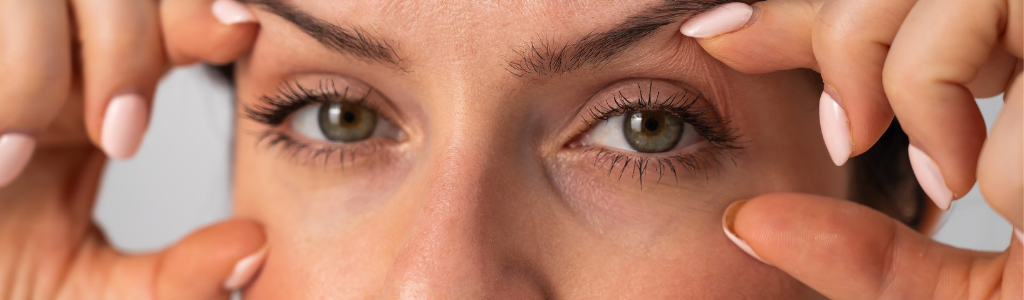
Who is a suitable candidate for eyelid surgery? At what age can it be performed?
Eyelid surgery — blepharoplasty — is a procedure that can be performed on a wide range of patients regardless of age, gender, or ethnicity. However, it is not accurate to say that every patient is suitable for this surgery. Choosing the right candidate is the most critical step for both a safe surgical procedure and a lasting result that meets expectations.
Dr. Selçuk Yüce, with experience from over 500 blepharoplasty cases, explains below what factors are considered in suitability assessments and who benefits most from this operation.
Who are suitable candidates for eyelid surgery?
1. Those with sagging and excess skin on the upper eyelid.
With age, the skin on the upper eyelid loses its elasticity and begins to sag. This can create both aesthetic and functional problems: the field of vision may narrow, and the eyes may look tired and aged. Upper blepharoplasty provides both visual improvement and functional relief for these patients.
2. Those with Bags and Swelling Under the Eyes
Under-eye fat deposits protruding forward to form bags can start at a young age due to hereditary factors or develop with aging. Lower blepharoplasty corrects these bags and puffiness, eliminating the tired, tense appearance.
3. Those Psychologically Affected by Eyelid Drooping
Drooping eyelids or under-eye bags can lead to loss of self-confidence, social withdrawal, and constant comments like "you look tired." For patients whose daily lives and self-esteem are negatively impacted by this condition, blepharoplasty makes a significant difference, both aesthetically and psychologically.
4. Patients with Reduced Visual Field (Functional Indication)
Severe drooping of the upper eyelid can narrow the field of vision from above. This constitutes a medical indication and is called functional blepharoplasty. Some insurance policies may cover this type of surgery.
5. Individuals Whose General Health Condition is Suitable for Surgery
As with any surgical procedure, blepharoplasty requires that the patient's overall health be suitable for the operation. The absence of active eye disease, uncontrolled chronic conditions, and normal blood clotting are among the key criteria.
6. Candidates with Realistic Expectations
Blepharoplasty rejuvenates and revitalizes the area around the eyes; however, it does not change the entire face. Patients expecting to look "like someone else" with their whole appearance, not just their eyes, may be disappointed. The correct expectation is a more rested, fresher, and harmonious eye area.
At what age is eyelid surgery performed?
Minimum Age Limit: Anatomical Maturity and Psychological Readiness
While there is no definitive lower age limit for blepharoplasty, it is generally not recommended for patients under 18. The key criteria are that the anatomy around the eyes has reached full maturity and that the individual is mature enough to make their own decision.
Exceptions exist: Individual assessments may be conducted for young patients who experience significant under-eye bags and whose quality of life is severely affected.
Most Commonly Treated Age Range: 35-65
Blepharoplasty is most commonly performed between the ages of 35 and 65. During this period, sagging of the upper eyelid, bags under the lower eyelid, and general fatigue around the eyes become more pronounced. However, successful results can also be achieved in healthy individuals over the age of 65.
Is there an upper age limit?
No. There is no strict upper age limit for blepharoplasty. The determining factor is the patient's overall health condition suitable for surgery. Even in patients in their 70s, blepharoplasty can be safely performed if the necessary health conditions are met.
Under-eye bags at a young age: At what age can they start?
Under-eye bags can become noticeable even in one's 20s and 30s due to hereditary factors. In these patients, lower blepharoplasty does not require waiting until older ages; the determining factor is the suitability of the anatomical structure for surgery.
Who is not a suitable candidate for eyelid surgery?
Those with Active Eye Disease
Blepharoplasty may be postponed or contraindicated in the presence of dry eye syndrome, glaucoma, retinal diseases, or an active eye infection. Approval from an ophthalmologist may be required before surgery.
People with Dry Eye Complaints
Dry eye can temporarily worsen after blepharoplasty. Patients with mild dry eye may undergo surgery; however, this should be discussed with your surgeon and included in the surgical planning.
People with Uncontrolled Chronic Diseases
Uncontrolled diabetes, high blood pressure, or thyroid disorders may delay surgery. These conditions must be under control, and approval from the relevant specialist is required.
Those Who Come With Unrealistic Expectations
Patients expecting results that blepharoplasty cannot provide—for example, a complete facial rejuvenation or dreaming of having someone else's eyes—may not be satisfied with the surgery. Clarifying expectations during the consultation is essential for both parties.
Smokers (Temporary Deferment)
Smoking impairs wound healing and increases the risk of complications. It is essential to quit at least 2-4 weeks before surgery and to avoid smoking during the recovery period.
Suitability Assessment with Op. Dr. Selçuk Yüce
The only reliable way to determine if you are a suitable candidate for eyelid surgery and which approach is best for you is to have a face-to-face consultation with an experienced plastic surgeon.
Dr. Selçuk Yüce utilizes his experience gained from over 500 blepharoplasty cases to comprehensively evaluate each patient's eyelid anatomy, skin quality, eye health, and individual expectations.
• Assessment of upper eyelid drooping
• Lower cover oil pane and skin analysis
• Visual field assessment (functional indication check)
• Dry eye and eye health screening
• Harmonizing aesthetic goals with realism
Surgeries are performed at Ankara Memorial and Medicana hospitals. Clinic: Çankaya Maidan Business and Life Center, Ankara.
Frequently Asked Questions (FAQ)
1. What is the minimum age for eyelid surgery?
While there is no strict lower age limit, this procedure is generally not recommended for patients under 18. Individual assessments may be necessary in specific cases, such as prominent under-eye bags at a young age.
2. Can I have eyelid surgery at age 60?
Yes. There is no upper age limit for blepharoplasty. It is sufficient for the patient's general health to be suitable for surgery. Successful results are also achieved in patients in their 60s and 70s.
3. Can men have eyelid surgery?
Absolutely yes. Blepharoplasty is performed regardless of gender. Eyelid anatomy may differ in men; therefore, surgical planning is adapted accordingly. In male patients, a natural, undetectable surgical result is particularly important.
4. I have dry eyes, can I have blepharoplasty?
Dry eye symptoms do not necessarily rule out blepharoplasty; however, this should be discussed in detail with your surgeon. In cases of mild dry eye, surgery can be performed with special precautions. If dry eye is severe, surgery may be postponed or a different approach may be necessary.
5. I have under-eye bags at a young age; should I wait until I'm older for surgery?
No. Under-eye bags can become noticeable even in your 20s and 30s due to hereditary factors. Lower blepharoplasty can be planned at any age where this condition negatively affects your quality of life and the anatomical structure is suitable.